A chance for more time before Stage 3 T1D
With TZIELD, it's possible to take control of what's next by delaying the onset of Stage 3 type 1 diabetes (T1D) for eligible people with Stage 2 T1D

Managing T1D is no longer just about waiting until you or your loved one experience symptoms
For people with Stage 2 T1D, TZIELD could mean more time before Stage 3, when daily insulin is needed. This is time that you or your loved one may use to learn more about T1D, plan next steps in care, and get ready for daily insulin management.
The efficacy of TZIELD in patients 8 years and older
Median time to onset of Stage 3 type 1 diabetes
With a single 2-week course of TZIELD, people had a median of 4 years* before the onset of insulin-dependent type 1 diabetes, compared to 2 years with placebo
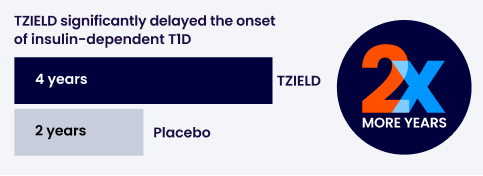
*In a clinical trial with TZIELD, people had a median† of 4 years before the onset of insulin-dependent (Stage 3) type 1 diabetes, compared to about 2 years with placebo. Results may vary.
†Median is the middle number in a group of numbers arranged from lowest to highest
The clinical trial included 76 people in the stage right before they became insulin-dependent (Stage 2). 44 received TZIELD and 32 received a placebo. People were followed until they were diagnosed with insulin-dependent T1D.
The median amount of time people were followed was 51 months (just over 4 years). People not diagnosed with insulin-dependent T1D were followed for different periods of time.
TZIELD has been studied in clinical trials for over 10 years. See the TZIELD safety profile and Important Safety Information below and talk to your doctor and wider healthcare team for more information or medical advice about side effects.
Want a deeper dive into the stages of type 1 diabetes?
Learn MoreWant to explore why delaying the onset of insulin-dependent T1D can be so important?
Learn MoreSerious side effects
TZIELD may cause serious side effects, including:

Viral reactivation
Epstein-Barr virus (EBV) and cytomegalovirus (CMV) are common viruses that may stay inactive in your body after an initial infection. TZIELD may cause these viruses to become active again which, especially in patients with a weakened immune system, can become serious and potentially life-threatening, especially in patients with a weakened immune system. These viral reactivations can happen during treatment with TZIELD and up to 2 months after your last dose. Your healthcare provider will test you for active EBV and CMV infections before treatment with TZIELD. Contact your healthcare provider right away if you develop symptoms of an infection during or after treatment with TZIELD (such as fever, swollen glands, or fatigue).

Cytokine release syndrome (CRS)
2% of people
- fever
- muscle and joint pain
- headache
- feeling tired (fatigue)
- nausea with or without vomiting
- increased liver enzymes in your blood
These signs and symptoms may start during the first 5 days of TZIELD treatment. Tell your doctor right away if you develop any signs or symptoms of CRS during treatment with TZIELD.

Decrease in white blood cells (lymphopenia)
73% of people
TZIELD may cause a decrease in a type of white blood cell called lymphocytes. A decrease in white blood cells is a serious, but common side effect that can affect your body’s ability to fight infections. A decrease in white blood cell counts can happen after your first dose. Your white blood cell counts will start to go back to normal after your fifth dose of TZIELD. Some people may develop longer and more severe decreases in lymphocytes.
The safety of TZIELD was studied in 5 clinical trials. Side effects were monitored in 773 patients who were given TZIELD and 245 patients who were given placebo. Not all of the patients in these studies had Stage 2‡ type 1 diabetes.
‡Stage 2 type 1 diabetes means someone has tested positive for 2 or more type 1 diabetes-related autoantibodies and has abnormal blood sugar levels (called dysglycemia) and no symptoms. In this stage, type 1 diabetes is progressing, but daily insulin injections aren’t needed yet.
The Safety Profile of TZIELD
The most common side effects of TZIELD in patients aged 8 and older include:

Decrease in lymphocytes, a type of white blood cell (lymphopenia)
73% of people
Rash
36% of peopleGeneral decrease in total white blood cells (leukopenia)
21% of people
Headache
11% of peopleThe most common side effects seen in children under the age of 8 were vomiting (52%) and diarrhea (30%).
TZIELD was approved by the FDA for children 1-<8 years of age based on the evidence of a previous clinical study with people 8 years of age and older with Stage 2 T1D (including 29 pediatric patients). and an additional safety study in 23 pediatric patients aged 1 to less than 8 years of age with Stage 2 T1D. Side effects were found to be consistent in young children and those 8 years and older. The safety of TZIELD was found to be consistent across each age group.
These are not all the possible side effects of TZIELD. Talk to your doctor and healthcare team for more information or medical advice about side effects.
Haven’t been screened for type 1 diabetes yet?
Consider talking to your or your loved one's doctor about autoantibody screening, a blood test different from annual blood work, to detect type 1 diabetes early. It's the first step you can take to determine if TZIELD may be right for you or your loved one.
Remember, type 1 diabetes doesn’t wait. Neither should you.
The window to treat with TZIELD can be short. Now is the time to take action and discuss with your doctor if TZIELD is right for you. Here are some additional resources to help you learn more.

The time is now to screen for type 1 diabetes
Because the window to treat with TZIELD can be short, take the first step and ask your doctor about autoantibody screening for autoimmune type 1 diabetes.
Important Safety Information and Indication
What is the most important information I should know about TZIELD? TZIELD may cause serious side effects. These including:- Viral Reactivation. Epstein-Barr virus (EBV) and cytomegalovirus (CMV) are common viruses that may stay inactive in your body after an initial infection. TZIELD may cause these viruses to become active again which, especially in patients with a weakened immune system, can become serious and potentially life-threatening. These viral reactivations can happen during treatment with TZIELD and up to 2 months after your last dose. Your healthcare provider will test you for active EBV and CMV infections before treatment with TZIELD. Contact your healthcare provider right away if you develop symptoms of an infection during or after treatment with TZIELD (such as fever, swollen glands, or fatigue).
- Cytokine release syndrome (CRS). Signs and symptoms may start during the first 5 days of TZIELD treatment and could include fever, nausea (with or without vomiting), feeling tired (fatigue), headache, muscle and joint pain, or increased liver enzymes in your blood. Tell your healthcare provider right away if you develop any signs and symptoms of CRS during treatment with TZIELD.
- Decrease in white blood cells. TZIELD may cause a decrease in a type of white blood cell called lymphocytes. A decrease in white blood cells is a serious, but common side effect that can affect your body’s ability to fight infections. A decrease in white blood cell counts can happen after your first dose. Your white blood cell counts will start to go back to normal after your fifth dose of TZIELD. Some people may develop longer and more severe decreases in lymphocytes.
Your healthcare provider will do blood tests to check for active infections, verify your liver function and your complete blood counts before you start treatment and during treatment with TZIELD. During and after your treatment with TZIELD, your healthcare provider will check for serious side effects, as well as other side effects, and treat you as needed. Your healthcare provider may temporarily or completely stop your treatment with TZIELD, if you develop liver problems, have a serious infection or viral reactivation, or if your blood counts stay too low.
What should I tell my healthcare provider before receiving TZIELD? Before or after receiving TZIELD, tell your healthcare provider about all your medical conditions, including if you:- have any of the conditions or symptoms listed in the section “What is the most important information I should know about TZIELD?”
- have a weakened immune system, including if you have Down syndrome.
- have a serious infection or an infection that does not go away or keeps coming back (chronic).
- have recently received or are scheduled to receive an immunization (vaccine). TZIELD may affect how well a vaccine works. Tell your healthcare provider that you are receiving treatment with TZIELD before receiving a vaccine.
- are pregnant or plan to become pregnant. TZIELD may harm your unborn baby. Do not receive TZIELD during pregnancy and at least 30 days before a planned pregnancy.
If you become pregnant while taking TZIELD, you are encouraged to report your pregnancy to us at our Adverse Event reporting line at 1-800-633-1610 or visit https://ae.reporting.sanofi.
- are breastfeeding or plan to breastfeed. It is not known if TZIELD passes into your breast milk and if it can harm your baby. Talk to your healthcare provider about the best way to feed your baby if you receive TZIELD.
Tell your healthcare provider about all the medicines you take, including prescription and over-the-counter medicines, vitamins, and herbal supplements.
What are the possible side effects of TZIELD? The most common side effects of TZIELD include:- decrease in white blood cell counts
- vomiting
- rash
- diarrhea
- headache
These are not all of the possible side effects of TZIELD. For more information, ask your healthcare provider or pharmacist. Call your doctor for medical advice about side effects. You may report side effects to the FDA at 1-800-FDA-1088. You may also report side effects to us at 1-800-633-1610 or www.fda.gov/medwatch or 1-800-FDA-1088.
Please see full Prescribing Information, including Risk of SERIOUS SIDE EFFECTS and Medication Guide.
What is TZIELD?
TZIELD is a prescription medicine used to delay the onset of Stage 3 type 1 diabetes, which is when your body cannot make enough insulin on its own and may require insulin injections. TZIELD is for adults and children 1 year of age and older who have Stage 2 type 1 diabetes. This means that they have tested positive for 2 or more type 1 diabetes-related autoantibodies, have abnormal blood sugar levels, and do not have type 2 diabetes or other forms of diabetes.
It is not known if TZIELD is safe and effective in children under 1 years of age.
Important Safety Information and Indication
- Viral Reactivation. Epstein-Barr virus (EBV) and cytomegalovirus (CMV) are common viruses that may stay inactive in your body after an initial infection. TZIELD may cause these viruses to become active again which, especially in patients with a weakened immune system, can become serious and potentially life-threatening. These viral reactivations can happen during treatment with TZIELD and up to 2 months after your last dose. Your healthcare provider will test you for active EBV and CMV infections before treatment with TZIELD. Contact your healthcare provider right away if you develop symptoms of an infection during or after treatment with TZIELD (such as fever, swollen glands, or fatigue).
- Cytokine release syndrome (CRS). Signs and symptoms may start during the first 5 days of TZIELD treatment and could include fever, nausea (with or without vomiting), feeling tired (fatigue), headache, muscle and joint pain, or increased liver enzymes in your blood. Tell your healthcare provider right away if you develop any signs and symptoms of CRS during treatment with TZIELD.
- Decrease in white blood cells. TZIELD may cause a decrease in a type of white blood cell called lymphocytes. A decrease in white blood cells is a serious, but common side effect that can affect your body’s ability to fight infections. A decrease in white blood cell counts can happen after your first dose. Your white blood cell counts will start to go back to normal after your fifth dose of TZIELD. Some people may develop longer and more severe decreases in lymphocytes.
Your healthcare provider will do blood tests to check for active infections, verify your liver function and your complete blood counts before you start treatment and during treatment with TZIELD. During and after your treatment with TZIELD, your healthcare provider will check for serious side effects, as well as other side effects, and treat you as needed. Your healthcare provider may temporarily or completely stop your treatment with TZIELD, if you develop liver problems, have a serious infection or viral reactivation, or if your blood counts stay too low.
What should I tell my healthcare provider before receiving TZIELD? Before or after receiving TZIELD, tell your healthcare provider about all your medical conditions, including if you:- have any of the conditions or symptoms listed in the section “What is the most important information I should know about TZIELD?”
- have a weakened immune system, including if you have Down syndrome.
- have a serious infection or an infection that does not go away or keeps coming back (chronic).
- have recently received or are scheduled to receive an immunization (vaccine). TZIELD may affect how well a vaccine works. Tell your healthcare provider that you are receiving treatment with TZIELD before receiving a vaccine.
- are pregnant or plan to become pregnant. TZIELD may harm your unborn baby. Do not receive TZIELD during pregnancy and at least 30 days before a planned pregnancy.
If you become pregnant while taking TZIELD, you are encouraged to report your pregnancy to us at our Adverse Event reporting line at 1-800-633-1610 or visit https://ae.reporting.sanofi.
- are breastfeeding or plan to breastfeed. It is not known if TZIELD passes into your breast milk and if it can harm your baby. Talk to your healthcare provider about the best way to feed your baby if you receive TZIELD.
Tell your healthcare provider about all the medicines you take, including prescription and over-the-counter medicines, vitamins, and herbal supplements.
What are the possible side effects of TZIELD? The most common side effects of TZIELD include:- decrease in white blood cell counts
- vomiting
- rash
- diarrhea
- headache
These are not all of the possible side effects of TZIELD. For more information, ask your healthcare provider or pharmacist. Call your doctor for medical advice about side effects. You may report side effects to the FDA at 1-800-FDA-1088. You may also report side effects to us at 1-800-633-1610 or www.fda.gov/medwatch or 1-800-FDA-1088.
Please see full Prescribing Information, including Risk of SERIOUS SIDE EFFECTS and Medication Guide.
What is TZIELD?
TZIELD is a prescription medicine used to delay the onset of Stage 3 type 1 diabetes, which is when your body cannot make enough insulin on its own and may require insulin injections. TZIELD is for adults and children 1 year of age and older who have Stage 2 type 1 diabetes. This means that they have tested positive for 2 or more type 1 diabetes-related autoantibodies, have abnormal blood sugar levels, and do not have type 2 diabetes or other forms of diabetes.
It is not known if TZIELD is safe and effective in children under 1 years of age.